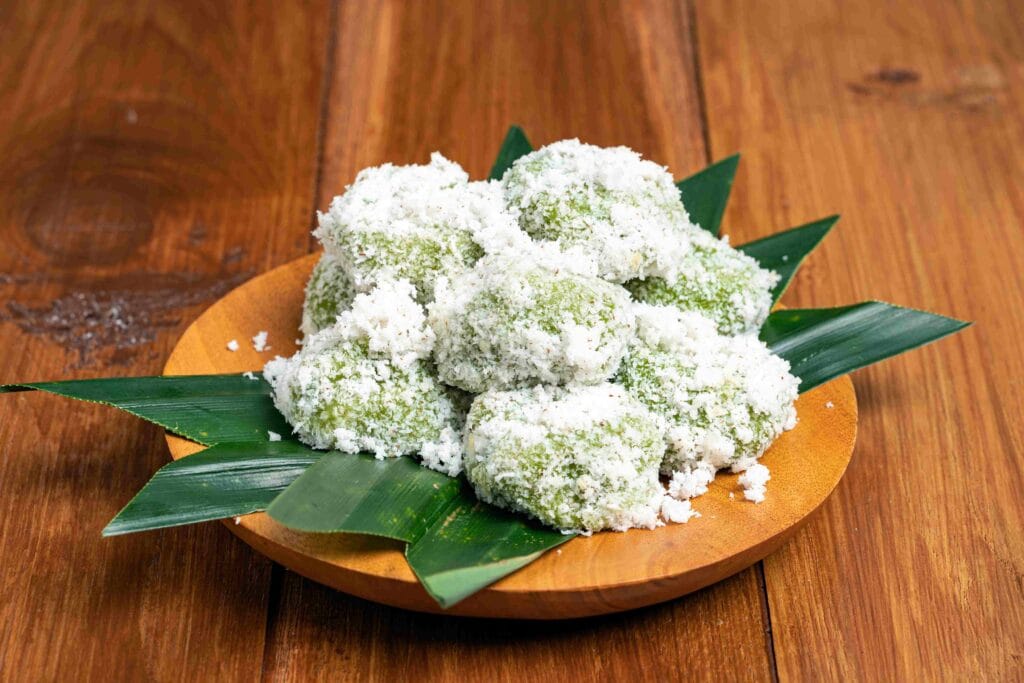
The food and beverage (F&B) industry is currently experiencing a strong wave of nostalgia. Consumers are looking for more than just good taste; they want flavors that evoke memories and emotions. Amidst the global “Local Pride” trend, the Klepon flavor profile emerges as a strong candidate for the spotlight. This legendary market snack possesses a unique flavor complexity. The blend of fragrant pandan, liquid brown sugar, and savory grated coconut creates an irresistible harmony.
However, bringing this authentic taste into mass-produced packaged goods is a challenging task. For industry players, the main challenge lies not in the idea but in the technical execution. This is why the role of a flavor company in Indonesia becomes crucial in translating traditional recipes to an industrial scale.
The Main Challenge: Translating Tradition to Industry
Adapting wet market snacks into Consumer Packaged Goods (CPG) like RTD (Ready-to-Drink) beverages, biscuits, or bakery items has its own hurdles. Authentic Klepon is known for the explosion of liquid brown sugar upon the first bite. Replicating this sensation in a dry biscuit or a milk beverage is difficult.
Often, klepon-flavored products on the market feel very artificial. The pandan aroma is lost behind the chemicals, or the coconut taste gets lost behind the sugar. The biggest challenge for food technologists is avoiding that artificial impression. The product must feel as natural as possible, as if just bought from a traditional morning market.
Additionally, finding the “Sweet Spot” is an art in itself. The three main elements—pandan, brown sugar, and coconut—must exist in a precise ratio. One element must not dominate the others. If the pandan is too strong, it tastes bitter. If the brown sugar dominates, the coconut nuance becomes less pronounced. This balance is what distinguishes premium products from ordinary ones.
Flavor Breakdown: Deconstructing The Golden Trinity
To create a successful klepon flavor, a deep understanding of each component is required. Each element has a specific role in building a complete flavor profile.
1. Pandan as the Top Note
Pandan serves to make a good first impression. This aroma must be the first thing smelled when the package is opened. The desired character is fresh, floral, and grassy. Many standard pandan extracts have a weakness: a bitter aftertaste lingering on the tongue. A good flavor solution must be able to eliminate this bitterness, leaving only a fragrant and clean green aroma.
2. Brown Sugar as the Heart Note
Brown sugar or palm sugar is the soul of klepon. Its function is to give body to the taste. The required profile is not just flat sweetness like white sugar. An experienced flavor manufacturer in Indonesia will focus on capturing caramelized and smoky profiles. This subtle “burnt” nuance and deep molasses taste give the rich character consumers seek.
3. Coconut as the Base Note
Coconut acts as the binder. This element provides mouthfeel or a creamy texture sensation. The savory touch from coconut is vital to cut through the sweetness of the sugar, so it does not become overwhelming. The technical challenge is to present the taste of grated coconut without the risk of rancidity often associated with using real coconut milk in long-term packaged products.
Application-Based Customization: One Flavor Does Not Fit All
One common mistake in product development is using a single flavor type for all applications. In reality, the food matrix greatly affects taste perception. Customization is the key to success.
In Beverage applications, such as trendy milk or coffee, texture is everything. The coconut profile needs enhancement to strengthen the creamy and thick sensation in the mouth. Meanwhile, the pandan aroma is made more subtle to blend softly with the milk or coffee base, creating a smooth and soothing drink.
Conversely, for Bakery applications like bread, cakes, or donuts, the challenge is heat. Baking processes can destroy volatile aroma components. Therefore, the pandan aroma and brown sugar character must be significantly boosted. The goal is for the flavor profile to remain intense and heat-stable even after passing through high-temperature ovens.
For Confectionery products, such as filled chocolates or candies, the approach differs again. Because the size is small, consumers want an instant flavor impact. All three elements—pandan, sugar, and coconut—must be made bold so the klepon sensation is felt immediately in the first bite.
Collaboration with Flavor Experts
The complexity of balancing traditional tastes with modern industrial demands requires the right partner. This is where Falmont enters as a strategic solution. As a flavor manufacturing company focused on the Asian market, Falmont truly understands authentic local nuances.
Collaborating with a flavor house that understands the Asian palate allows F&B producers to obtain precise formulations. Falmont provides not only ingredients but also expertise in modifying flavor structures to fit the final product’s vision. Whether targeting millennials who love innovation or the family market longing for classic tastes.
Klepon flavor innovation is not just a passing trend. It is proof that rich local culinary heritage has a prestigious place on modern supermarket shelves. With the right formulation, accurate flavor balance, and a reliable development partner, F&B products with the Klepon flavor profile are ready to become the new favorites in the market.