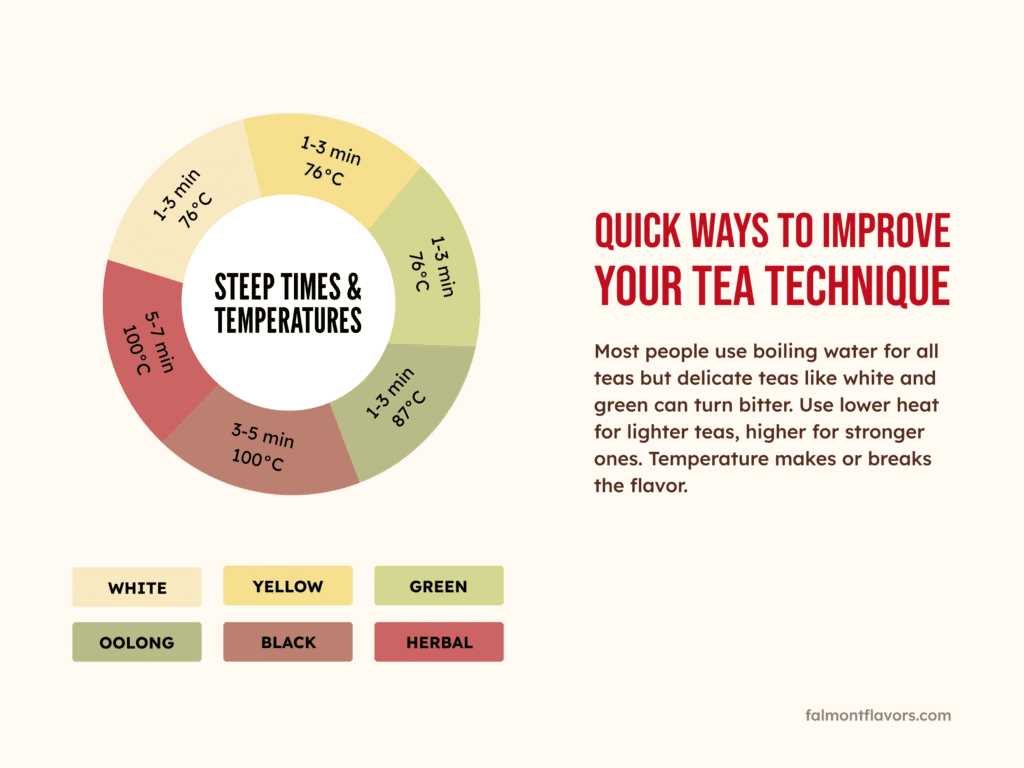
Tea is one of the most popular beverage ingredients in the world. From premium green tea to classic black tea, each one has its own loyal following. But one thing often overlooked, both in home kitchens and at industrial production scale, is water temperature during brewing. This mistake sounds minor. In reality, its impact on a product’s final flavor is very real.
All Teas Are Different. Treat Them Differently.
Many people assume that boiling water is the universal standard for brewing tea. The logic makes sense: hot water = maximum results. However, it is not that simple. Each tea has its own character. Some are strong and resilient, some are delicate and easily damaged. If all teas are brewed the same way, the results will never be optimal. This is where water temperature is the main deciding factor.
Green Tea and White Tea
Green tea and white tea are among the most delicate teas. Their leaves are minimally processed, so their compounds remain highly active and respond quickly to excessive heat.
When brewed with boiling water (around 100°C), these teas can produce a sharp bitter taste. Their distinct aroma fades along with it. What remains is an unpleasant astringent flavor.
The solution? Use warm water rather than boiling. Ideally, around 70–80°C for green tea, and slightly lower for white tea. The difference will be noticeable. The taste becomes cleaner, the aroma more fragrant, and the tea’s character comes through more fully.
Black Tea
Black tea has a different profile. Its full oxidation process makes the leaves far more resistant to high temperatures. Boiling water actually helps draw out the full character of black tea — bold, rich, and slightly malty.
For black tea, 90–100°C is the ideal range. Below that, the flavor can feel underwhelming and fall flat. So yes, different teas, different treatment. There is no single temperature that works for all.
Why Does This Matter for the F&B Industry?
If temperature differences are already significant at the individual consumer level, imagine the impact at the production scale.
For beverage companies that use tea in their product formulations, whether bottled tea, RTD drinks, or tea-based blends, flavor consistency is everything. One uncontrolled temperature variable can drastically shift the flavor profile from batch to batch.
This also applies to product development teams working with flavoring companies. Tea-based flavors, for instance, have their own optimal point in the application process. Temperature characteristics play an important role, including in determining how flavors react within a specific food system.
The Synergy Between Raw Ingredients and Flavors
One thing that is often overlooked is how flavors interact with temperature during the production process. As an experienced flavor company in Indonesia, Falmont Flavors understands that flavors are not simply “just added in”. There is a working temperature, an application point, and optimal conditions to ensure that flavor character is not lost before it reaches the end consumer.
As one of the flavor companies in Asia focused on taste solutions for the F&B industry, Falmont Flavors actively supports clients throughout the product development process, including ensuring that flavor application conditions align with the characteristics of the raw ingredients.
Perfecting the taste of tea in F&B products is not solely about choosing the best raw ingredients. The process plays an equally important role. By understanding the relationship between temperature and flavor profile, production teams can create beverages that are more consistent, more enjoyable, and more competitive in the market.
For those looking for a partner to help optimize product flavor from start to finish, from flavor selection to application guidance, Falmont Flavors is ready to be part of that process.